Where an AI Agent Should Stop: Designing the Dry Run
The most important design decision in an AI agent is where it stops. The dry-run pattern from an enterprise agent in pilot, how to sort reversible from irreversible steps, and the metric that warns you when review turns into rubber-stamping.

A common question about AI agents is how autonomous they should be. I find it more useful to ask a narrower question, one action at a time.
The better question is where the undo button stops working.
The agent I am piloting
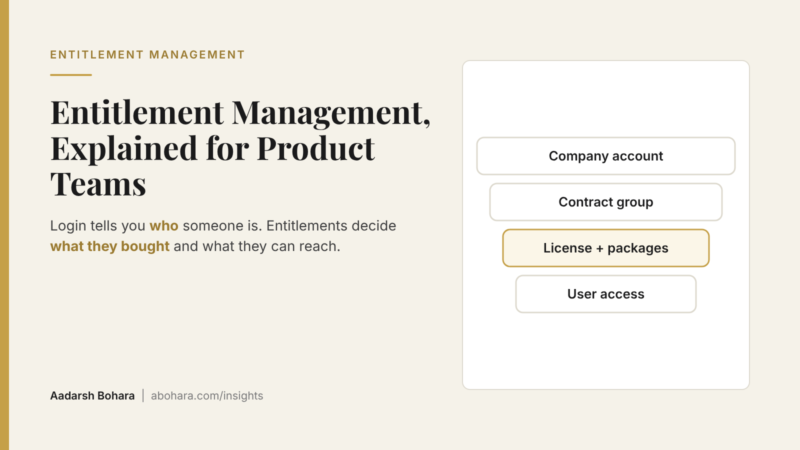
Where I work today, a team of more than 40 delivery specialists turns every new customer order into a working entitlement setup: the company account, the group for that contract, the license with its product packages and customizations, the group assignments, and the subscription enrollment links. Our products are complex to entitle. Packages and customizations interact, and the work takes two to five hours per order.
None of the information is new. All of it already exists in the order. A skilled person spends an afternoon moving it by hand.
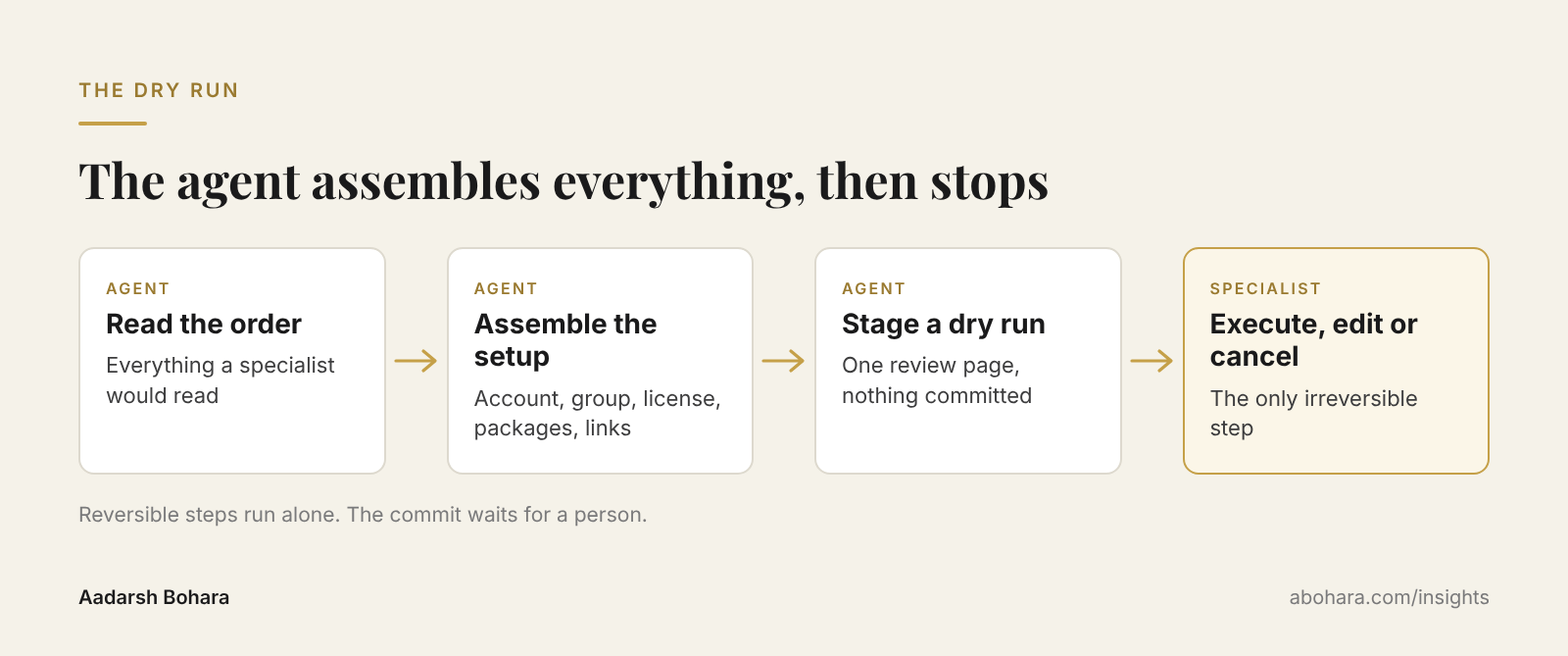
So I am designing and piloting an agent to do that work. It watches for incoming orders, reads each one, finds or creates the right account, builds the group, the license and its packages, completes the assignments and generates the enrollment links.
Then it stops.
The dry run is the product
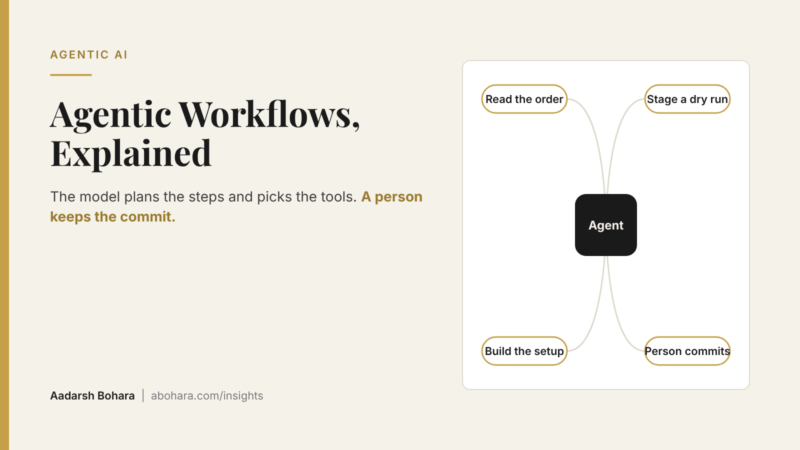
The main guardrail is the dry run: everything the agent assembled is staged on a single review page. The specialist sees the complete setup before any of it exists and has three choices: execute it as staged, edit it and then commit, or cancel it.
Nothing reaches a customer until a person has said so.
The reason is cost asymmetry. An entitlement error is visible to the customer, sometimes contractual, and there is no quiet undo. A saved hour is worth much less than wrong access in production. So the reversible steps run on their own, and the one irreversible step keeps a human on the commit.
The review page is more than a safety feature. I expect it to decide whether the delivery team adopts the agent at all. Nobody hands their job to something they cannot check. Almost everybody will hand it to something they can.
Sorting reversible from irreversible
Before building any step, I sort it into one of two lists.
| Runs on its own | Waits for a person |
|---|---|
| Reading an order or a record | Granting or removing access |
| Looking up an existing account | Anything a customer will see or receive |
| Drafting a setup, a message or a change | Changes to contracts, licenses or billing |
| Scoring, classifying, deduplicating | Deleting data |
| Assembling a preview | Spending money |
The left column is all preparation. If the agent gets it wrong, you fix it and nothing happened. The right column changes the world. That is where a person belongs, and that is where their attention should go.
One clear review at the point of commit gets real attention. A confirmation on every small step trains people to click through without reading, which is worse than no review at all.
The metrics that tell you it is working
I track three numbers, and they are deliberately boring.
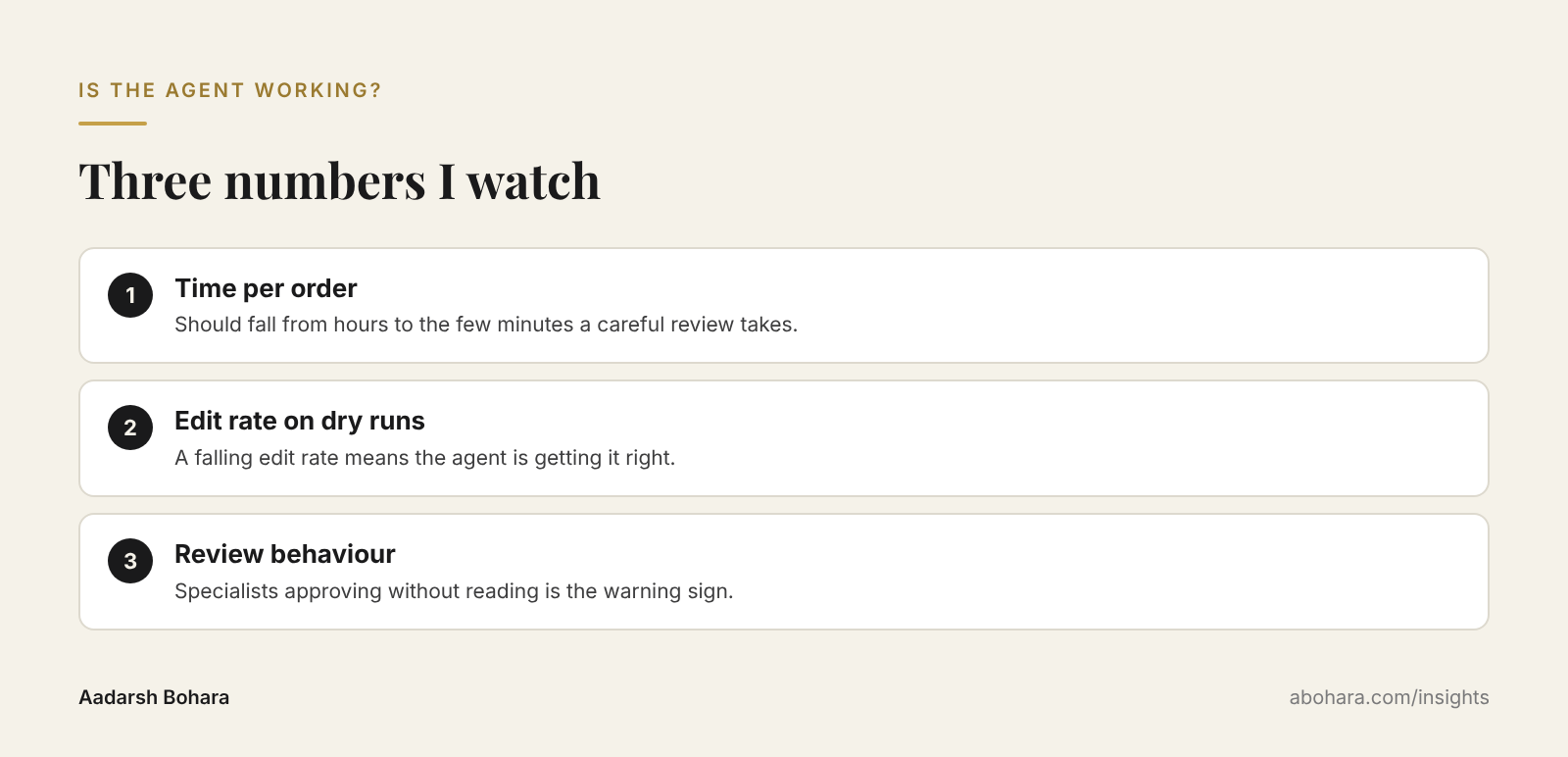
Time per order. The obvious one. It should fall from hours to the few minutes a careful review takes.
Edit rate on dry runs. How often the specialist changes the staged setup before committing. A falling edit rate means the agent is getting it right.
Review behaviour. The warning sign I watch for is specialists approving without reading. If the review step becomes a rubber stamp, the safeguard is gone and the design has failed quietly, even while the first two numbers look great.
Tuning: the specialist’s work is the benchmark
I have built the workflow layer by layer, tuning each step until the agent’s output matches what the delivery team would have produced by hand. That is the only benchmark that matters here. A draft that needs heavy rework saves nobody anything, and a leaderboard score does not tell you whether a specialist would sign their name to it.
The same rule, twice
This is the second time I have built the same line. MindBacklog, the product intelligence platform I built on my own, has an assistant with 27 tools that can read and change product data. Every change it proposes is staged on a confirmation card before anything is written.
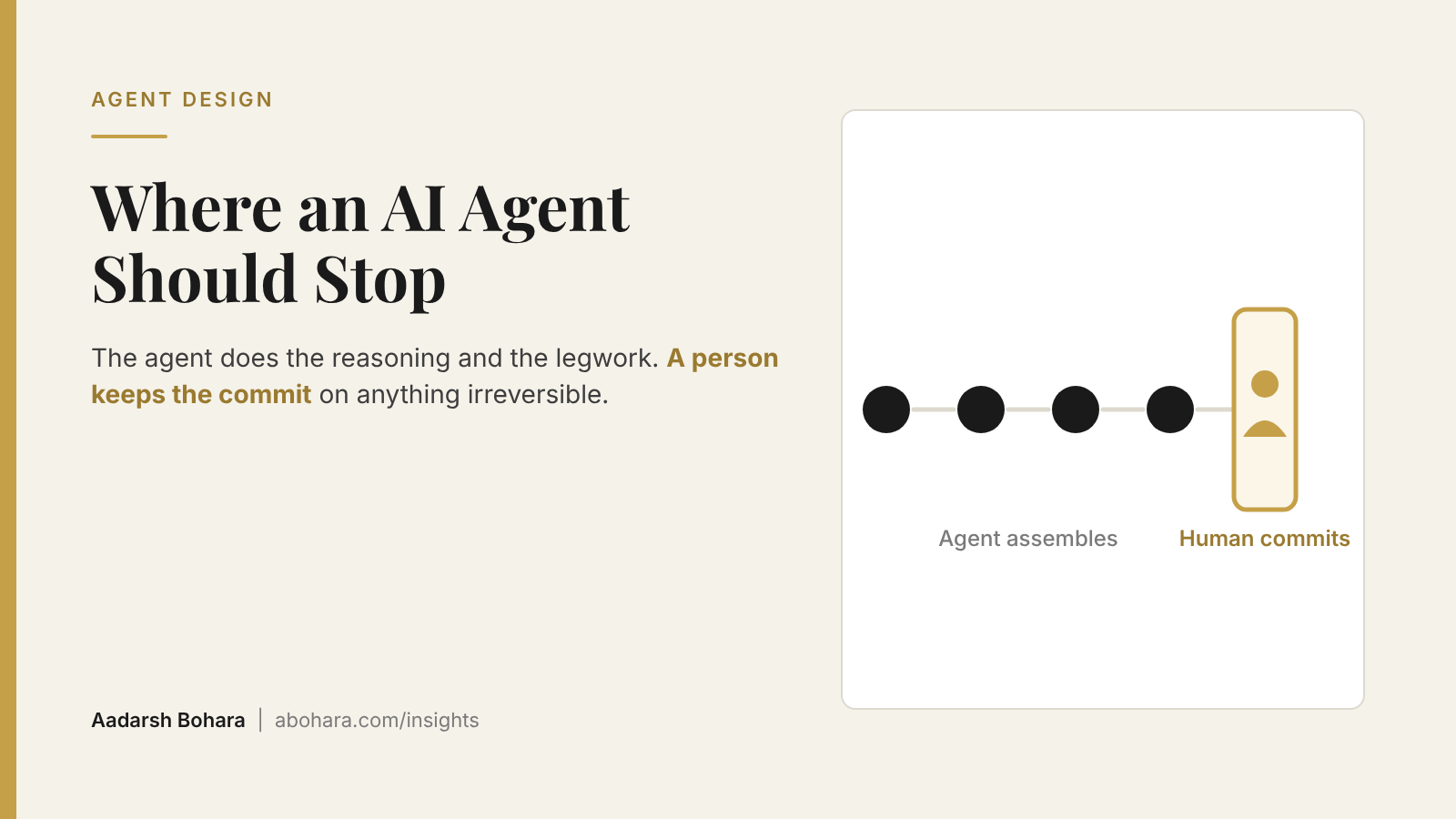
Two unrelated systems, one enterprise and one my own, with the same rule: agents do the reasoning and the legwork, and humans keep the commit on anything irreversible. Building it twice is what convinced me it is a design principle and not a workaround.
If you are designing an agent this quarter
- List every action the agent can take and put each one in a column: reversible or not.
- Let the reversible column run, fast, with no prompts.
- Batch everything irreversible into one review the person can actually read.
- Make edit-then-commit as easy as approve. If editing is painful, people approve things they should have fixed.
- Watch the edit rate and the review behaviour, not just the time saved.
The agents people actually use are the ones whose builders found the exact line where autonomy should stop.