Non-Human Identity for AI Agents: A Product Leader’s Guide
Service accounts, API keys, integrations and now AI agents: every identity that is not a person. Why agents change the rules for non-human identity, the lifecycle to put around each one, and what your customers' administrators will ask to control.

A non-human identity (NHI) is any identity that is not a person: a service account, an API key or token, an integration account, a workload, and now an AI agent. Each one can sign in and act, so each one needs the same answers a person does: who it is, what it can reach and who approved that.
For years non-human identities were a back-office problem, handled by whoever set up the integration. AI agents moved them to the front, because agents are the first non-human identities that decide what to do next.
The kinds of non-human identity
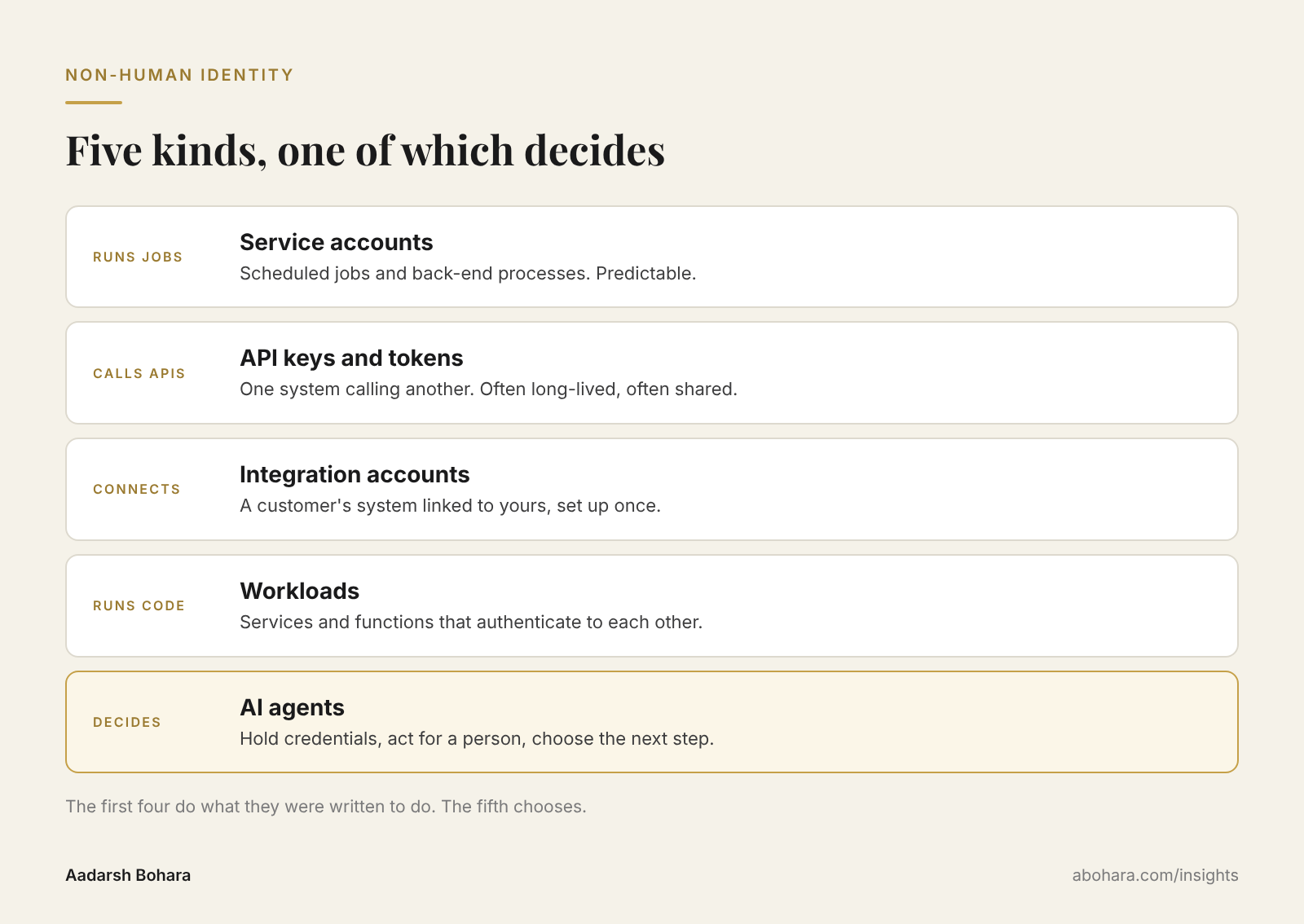
The first four kinds do what they were written to do. A service account runs the same job every night. An API key lets one system call another in the same way every time. Their risk comes from age and neglect: long-lived credentials, shared keys and owners who left years ago.
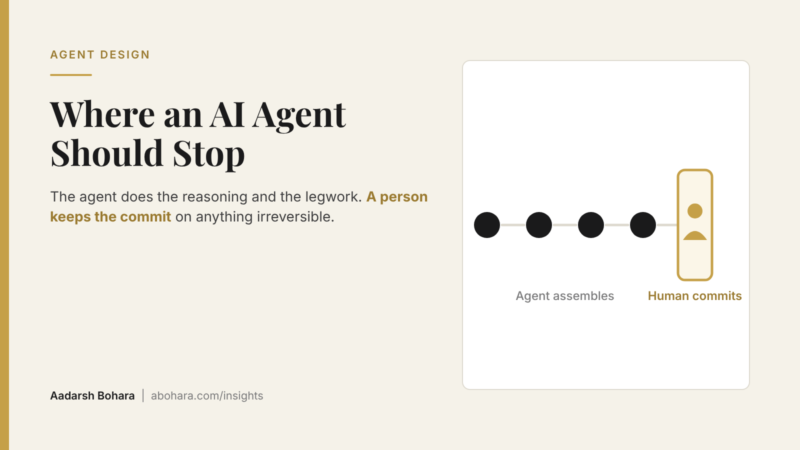
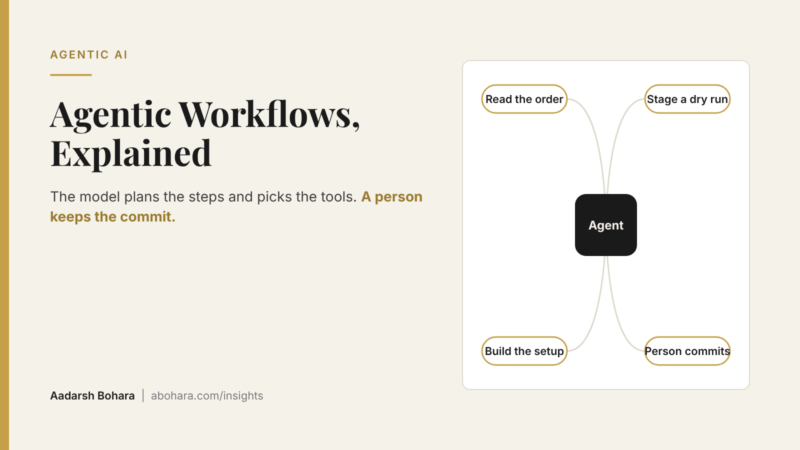
An agent is different. It holds credentials, acts for a person and chooses its next step. Least privilege used to mean “only the access this job needs.” For an agent, the job changes with every request.
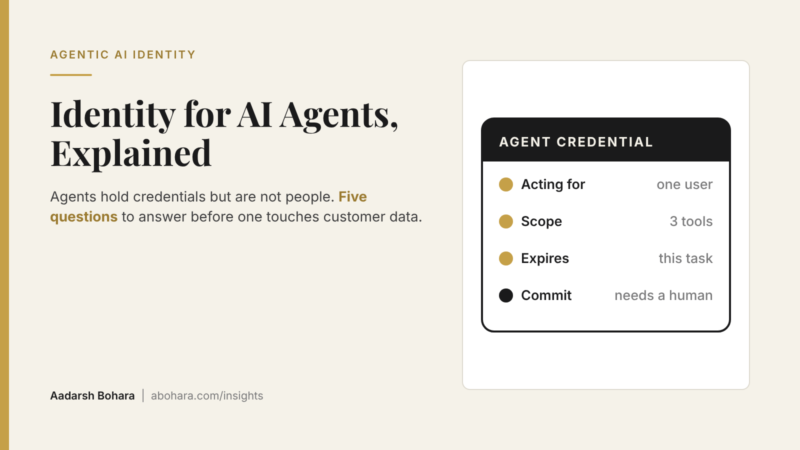
I covered the five questions to answer before an agent touches customer data in an earlier post on identity for AI agents. This post is about what surrounds those answers: the lifecycle of every non-human identity, and what your customers will expect to control.
A lifecycle for every non-human identity
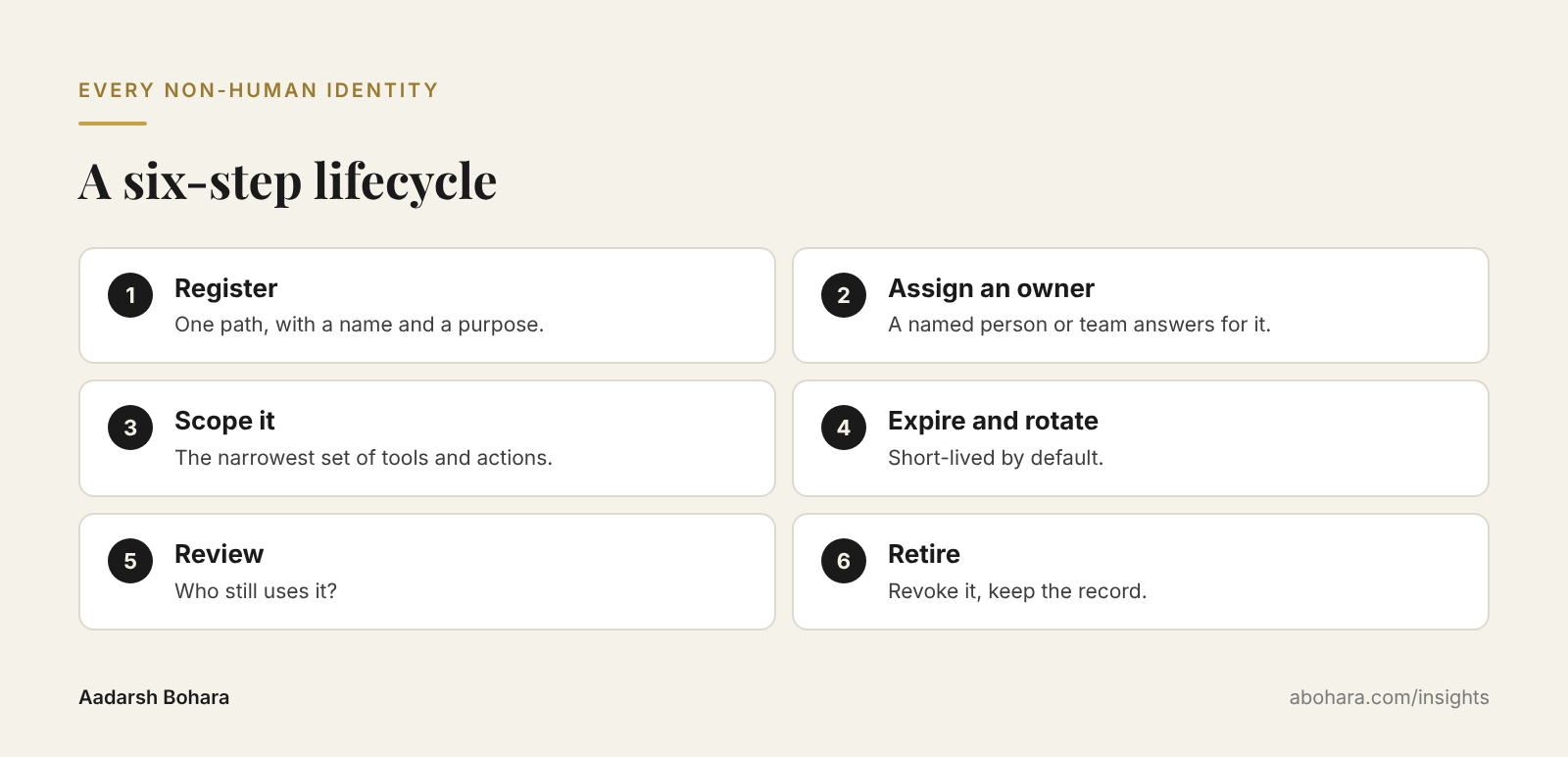
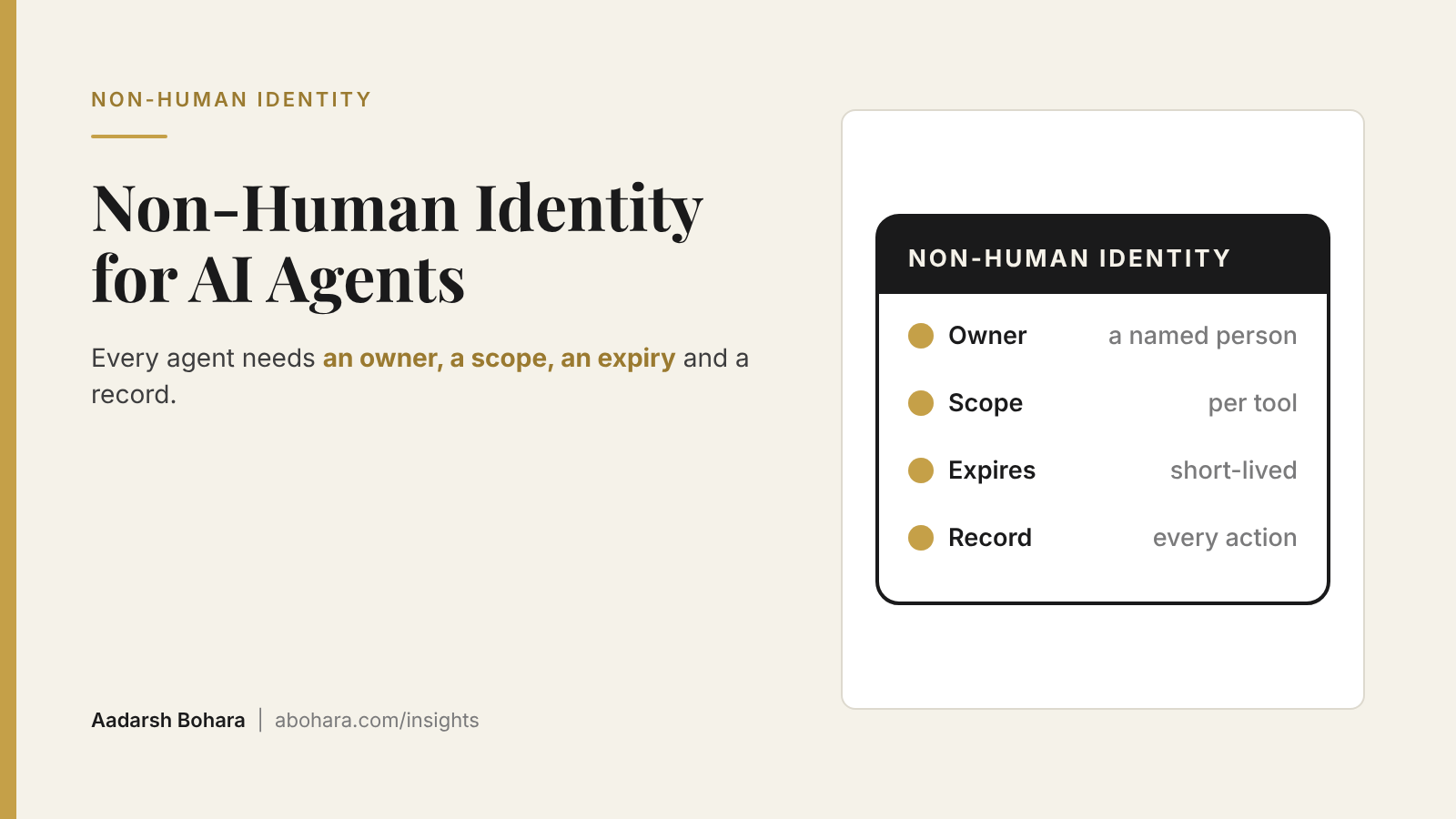
- Register. Every non-human identity is created through one path, with a name and a stated purpose. No credentials minted on the side.
- Assign an owner. A named person or team answers for it. When that person leaves, ownership moves before anything else happens.
- Scope it. Give it the narrowest set of tools and actions that does the job. An agent working for a user should get less than that user has, because it brings no judgment about what to leave alone.
- Expire and rotate. Short-lived by default. A long-lived key needs a reason and a rotation date.
- Review. Ask on a schedule who still uses it. A credential nobody uses is risk with no value.
- Retire. Revoke it, and keep the record of what it did.
None of this is new for service accounts. What is new is the volume and the autonomy. A team that adds agents one feature at a time can create many of these identities in a quarter, each with more freedom than any script it replaces.
When I built the MCP server for MindBacklog, a product I made on my own to go deeper on AI product work, every one of its 18 tools was a scope decision: what the tool exposes, what a client can change, and where a person confirms before anything commits. Clients authenticate with a bearer token. The token answers who is calling. The tool scope answers what that caller may do. Both have to be decided, and the second one is the product work.
In B2B, your customers own these identities too
In customer identity, your customers create non-human identities too: API keys for their integrations, accounts for their own automations, and soon agents acting for their users inside your product.
Their administrators will want four things.
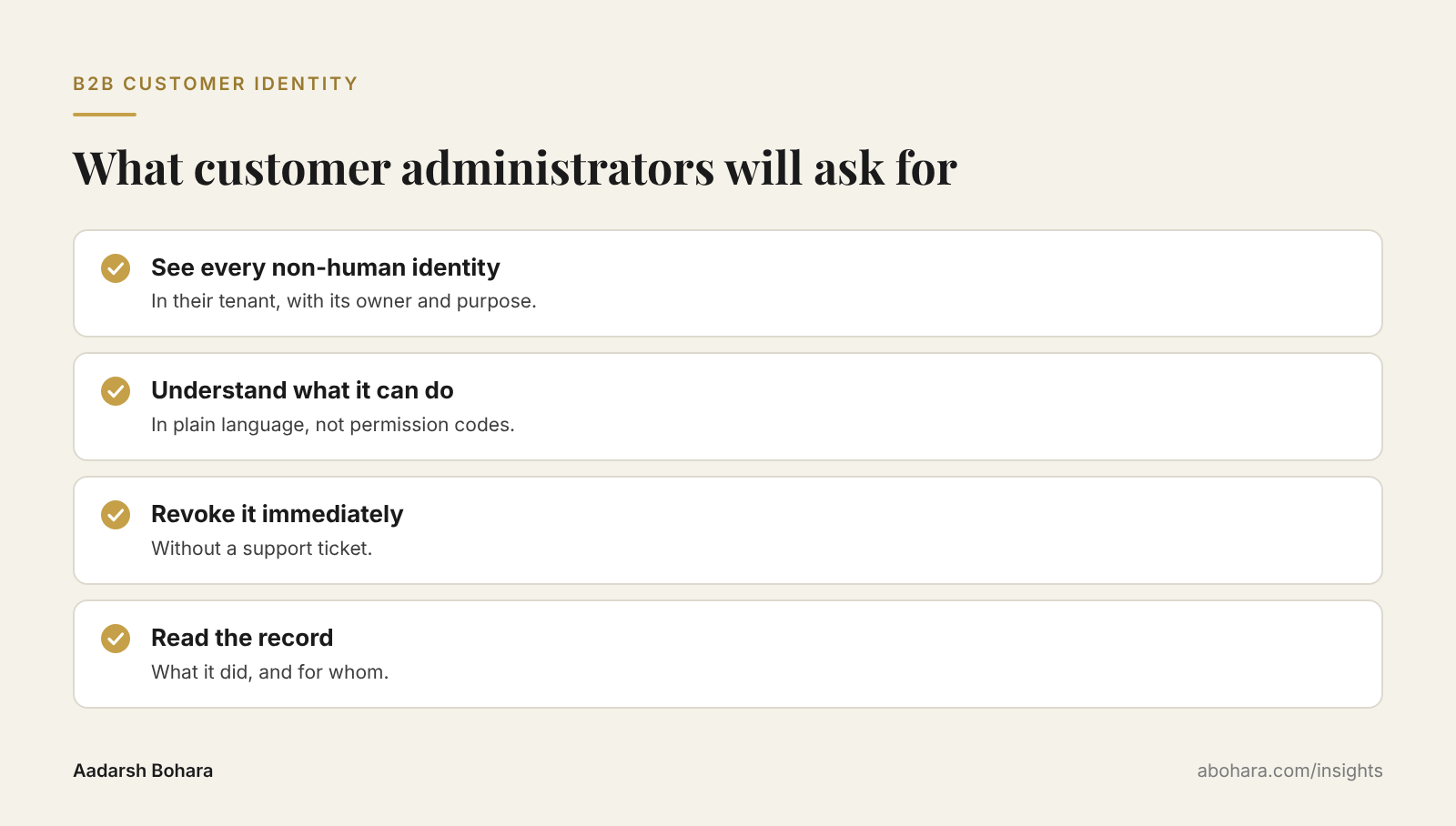
- See every non-human identity in their tenant, with its owner and purpose.
- Understand what each one can do, in plain language rather than a list of permission codes.
- Revoke one immediately, without filing a support ticket.
- Read the record of what each one did, and for whom.
Self-serve matters here for the same reason it matters in enterprise single sign-on setup. Every change that needs your support team is a delay for the customer and a queue for you. Customers who can see and revoke agent access themselves are more likely to let agents do more.
The hard part is rarely the credential. In customer identity it is the entitlement behind it: which contract the access comes from, which products that contract covers, and what happens to the agent’s access when the contract changes or ends. Treat an agent’s access the way you treat a user’s, as something derived from what the customer bought.
The record
Every action a non-human identity takes needs a record a skeptic can follow: which identity acted and which version of it, who it acted for, what it did and what it was allowed to do at that moment, who approved it, and whether it can be undone.
With that record, you can explain an incident to a customer. Without it, the investigation starts from scratch, and “the integration did it” is not an answer a customer will accept.
Where to start
- Take inventory. List every non-human identity with an owner. The ones nobody claims are the first to retire.
- Give each agent its own identity. No shared keys between agents, or between an agent and a person.
- Put approval at the commit. Reversible steps can run alone. Anything a customer will see waits for a person.
- Build the customer’s revoke button before they ask for it. It is cheaper than the support tickets, and it is what lets customers trust the agent.
Non-human identity used to live in a security team’s spreadsheet. Once agents act for your customers’ users, it becomes part of the product, and the product team should own the decisions.